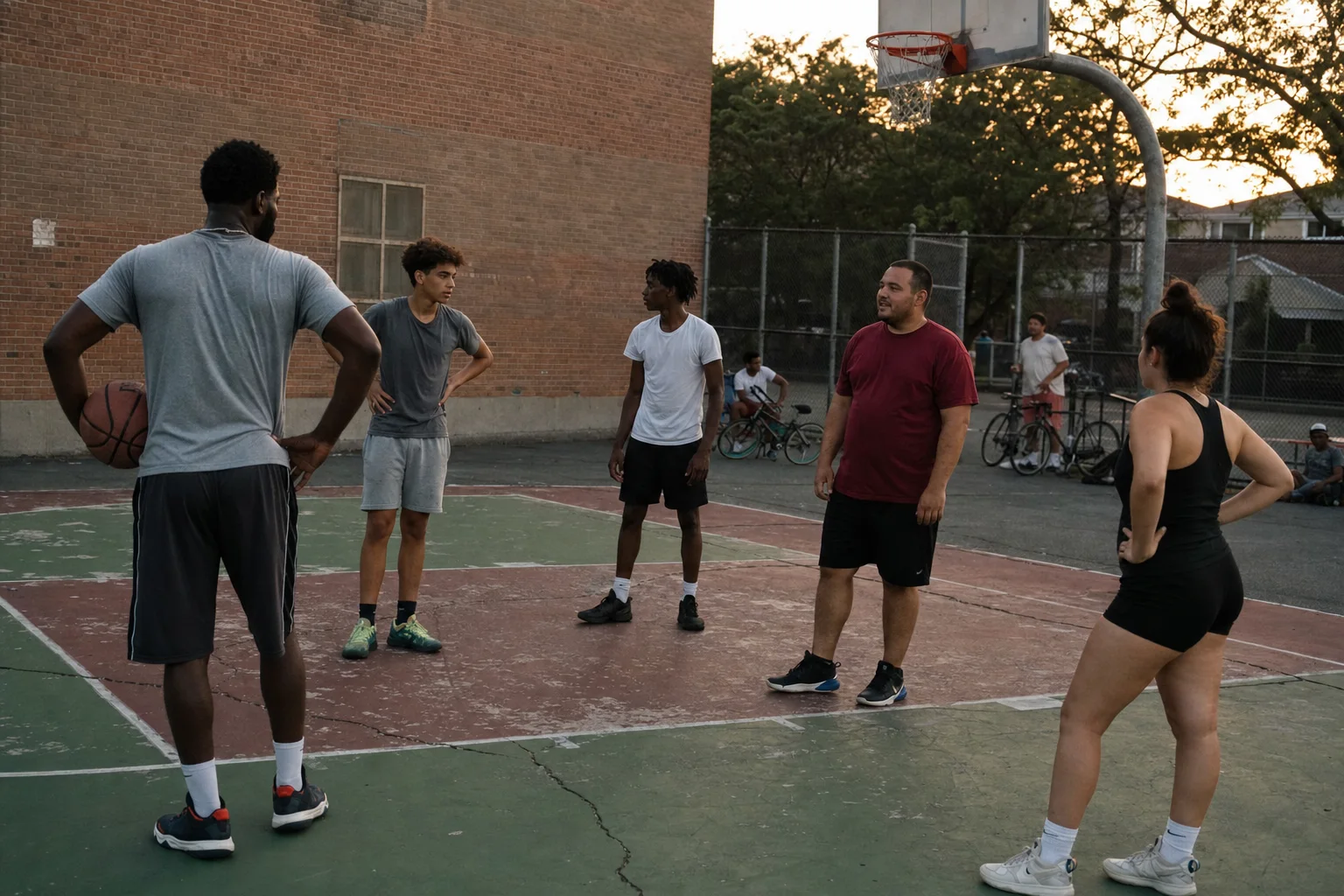
The lights come on before every player has arrived. For a few minutes the field is brighter than the neighborhood around it, waiting for the evening to declare itself. The caretaker tests one lamp twice. A goalkeeper carries both nets because the person who promised to help is delayed at work.
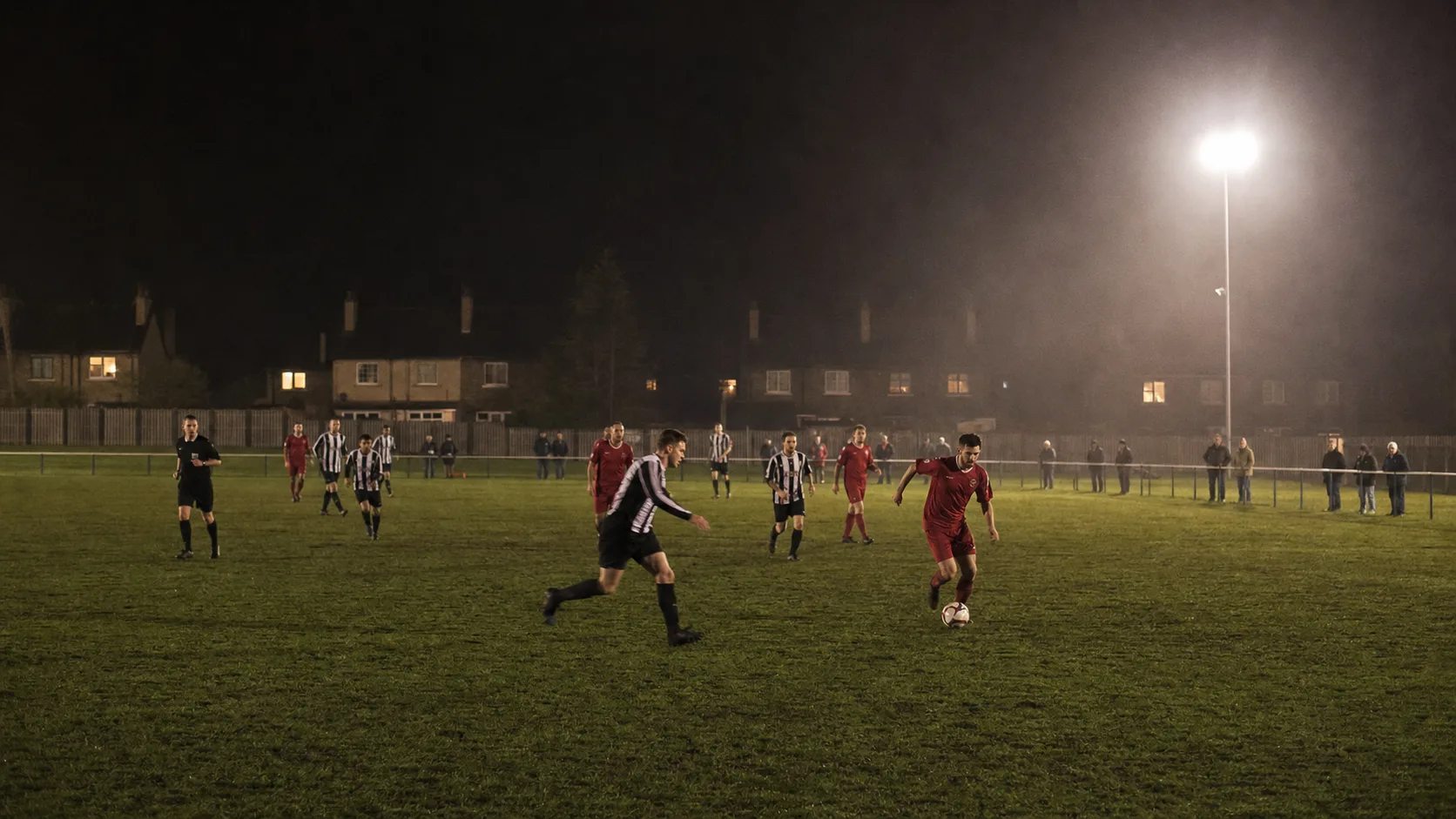
There are no stands and no official clock. Time is kept by the caretaker, who wants the keys back before ten. Teams change from week to week as shifts, children and sore knees rearrange availability. The league survives by treating a lineup as a proposal.
Nobody asks what division this is. They ask whether you are coming next week.
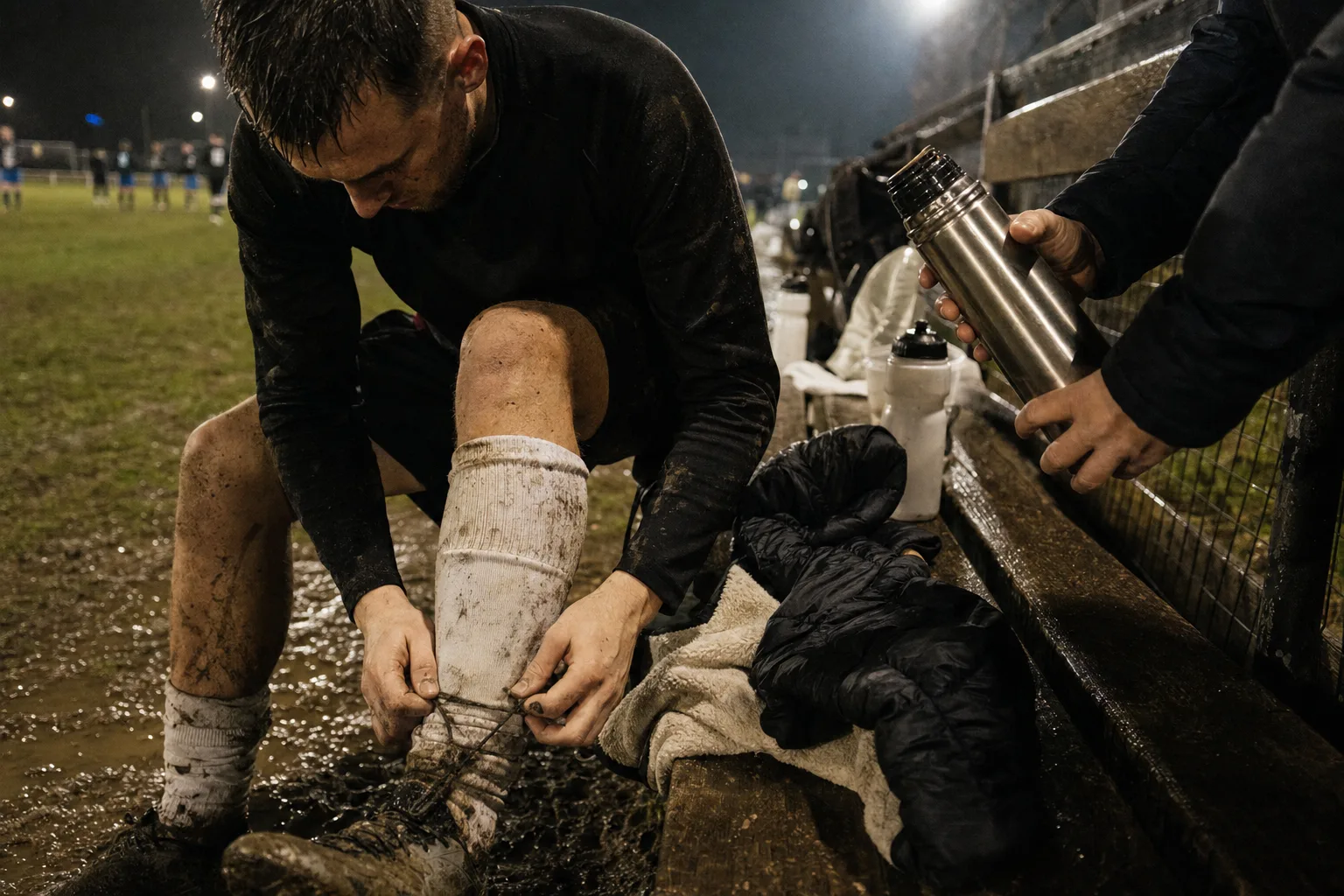
Rain gathers in the goalmouth. The ball stops once in a puddle and everyone laughs except the defender who had already committed to the pass. A substitute lends a coat to an opponent’s child. Someone on the sideline keeps score on the back of a receipt, then loses it.
The final whistle is approximate. One team believes the score is level and the other is certain it has won by one. The disagreement lasts only until someone mentions the time. Nets come down, boots are knocked against the fence, and the field becomes dark in sections.
The caretaker walks the touchline with a bucket, collecting tape and two water bottles. Players help carry the goals toward the shed. The league’s continuity depends on this final ten minutes, when the pleasure of playing becomes responsibility for leaving the ground usable.
At the gate, a new player asks how to join. Three people answer at once, offering different versions of the rules. The confusion is settled with a phone number and a simple instruction: come early next Tuesday. Belonging begins as logistics before it becomes memory.
Afterward, the pitch empties slowly. The rain continues with no result to protect. At the gate, people confirm next Tuesday as though making a plan against the week itself.