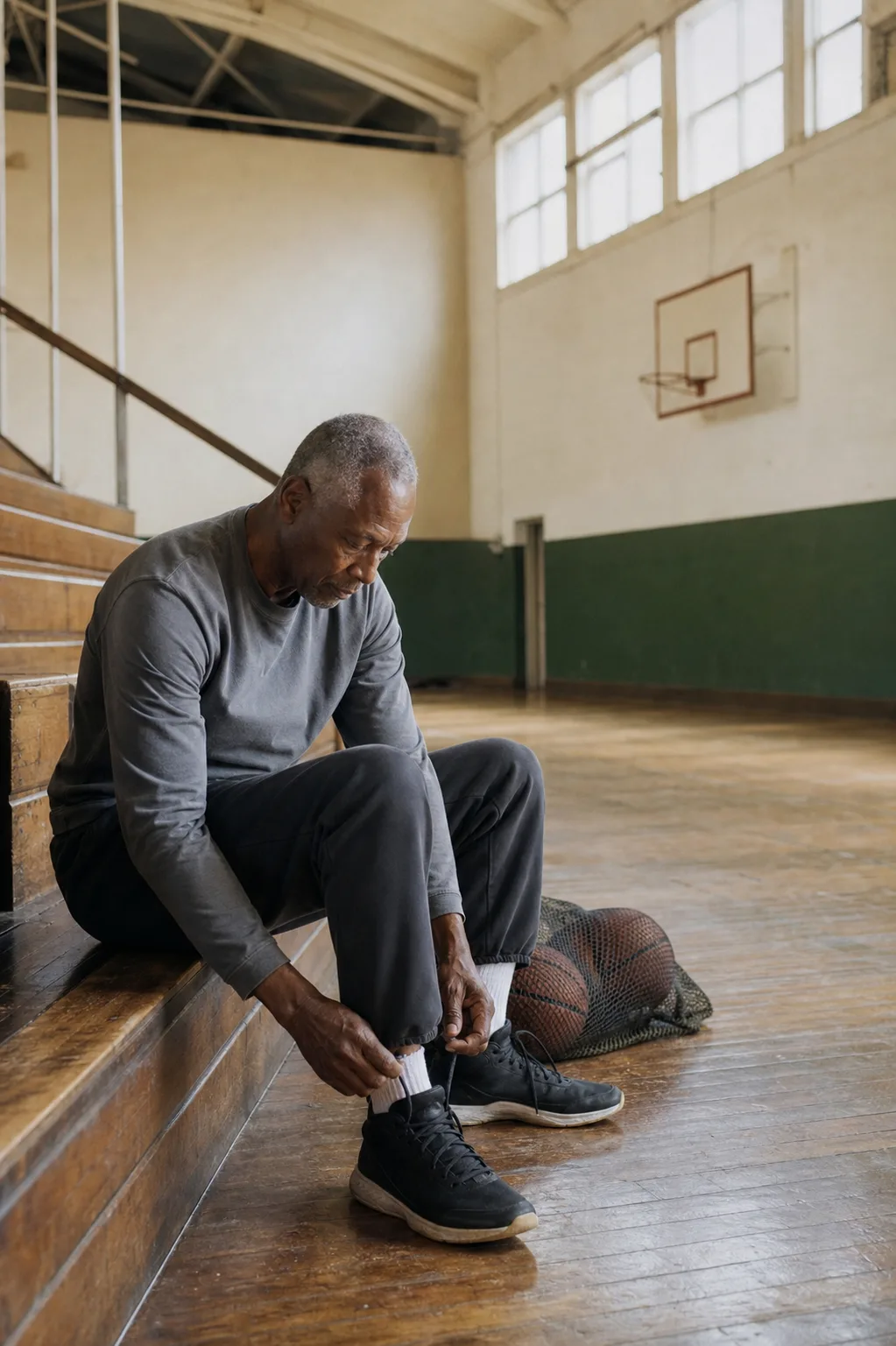
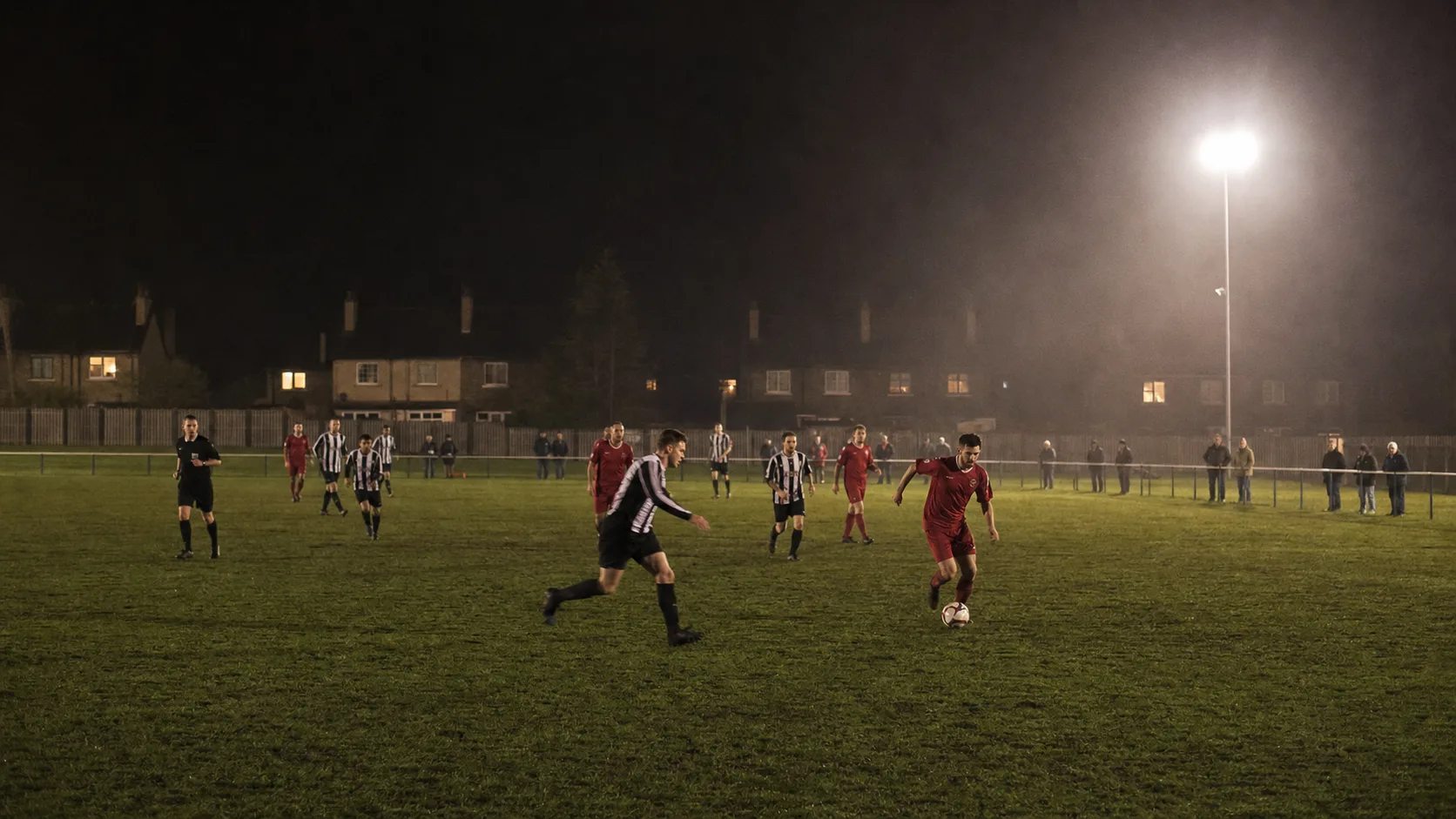
The first game begins before there are enough people for two teams. A teenager shoots alone at the west basket while a delivery driver changes shoes beside the fence. Two children draw a boundary in chalk for a game that borrows the court without using either hoop. By six, the place has negotiated itself into order.
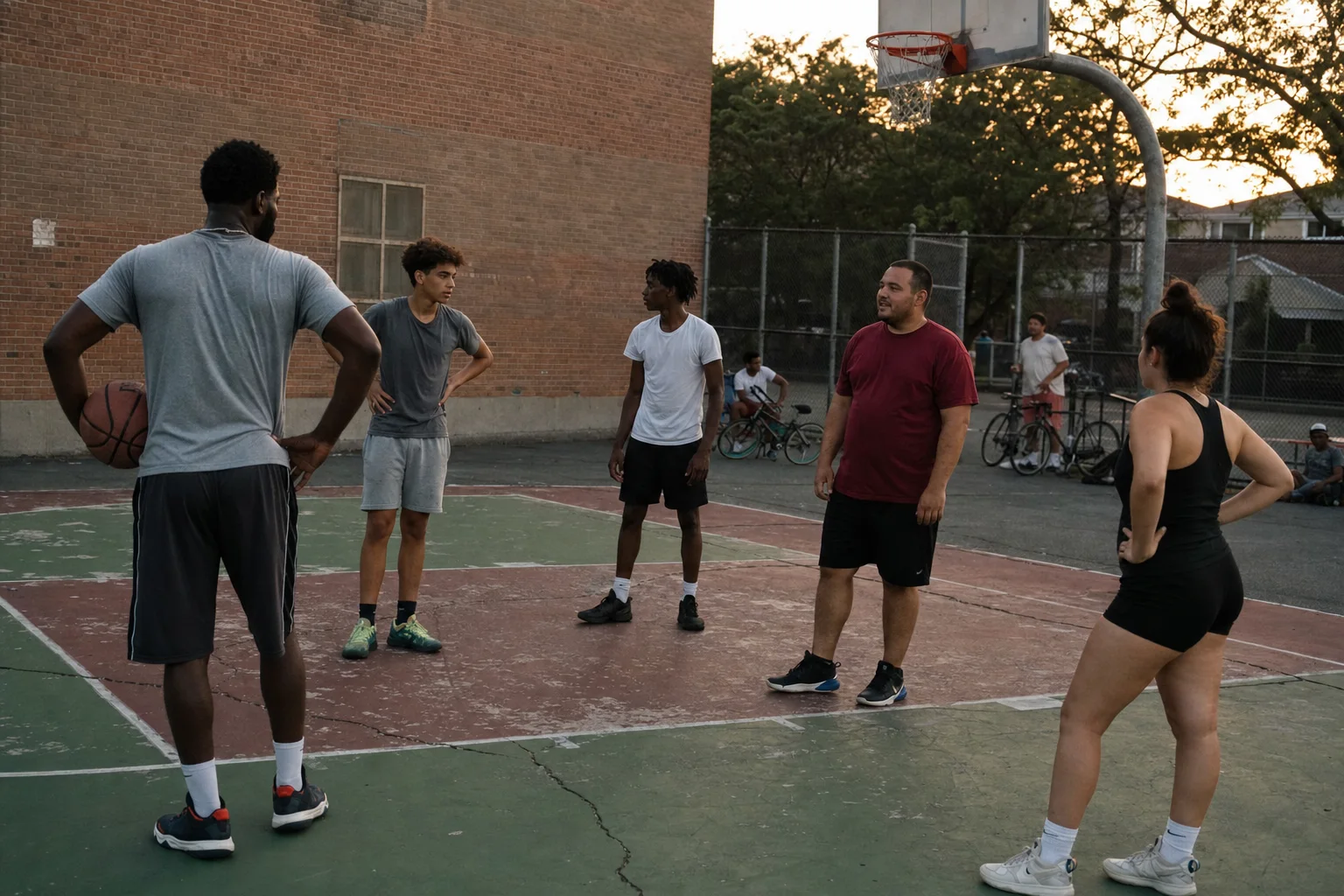
There is no permanent list of who belongs. The rules are remembered and revised: winners stay for two games, new arrivals call the next one, and the youngest player gets one possession before anyone guards closely. Disagreement is common. Exclusion is noticed.
You learn the court by learning who is already here.
The surface is cracked near the free-throw line. One rim leans slightly forward. These are not romantic defects; people would repair them if the budget existed. But familiarity has made the imperfections legible. Players know which bounce will die and where rain remains longest after a storm.
On Saturdays, two regulars arrive with a broom, a wrench and a bag for litter. Their maintenance cannot replace public investment, and nobody pretends otherwise. It does establish a daily form of ownership: the court is common ground, so care is shared without becoming an excuse for institutions to withdraw.
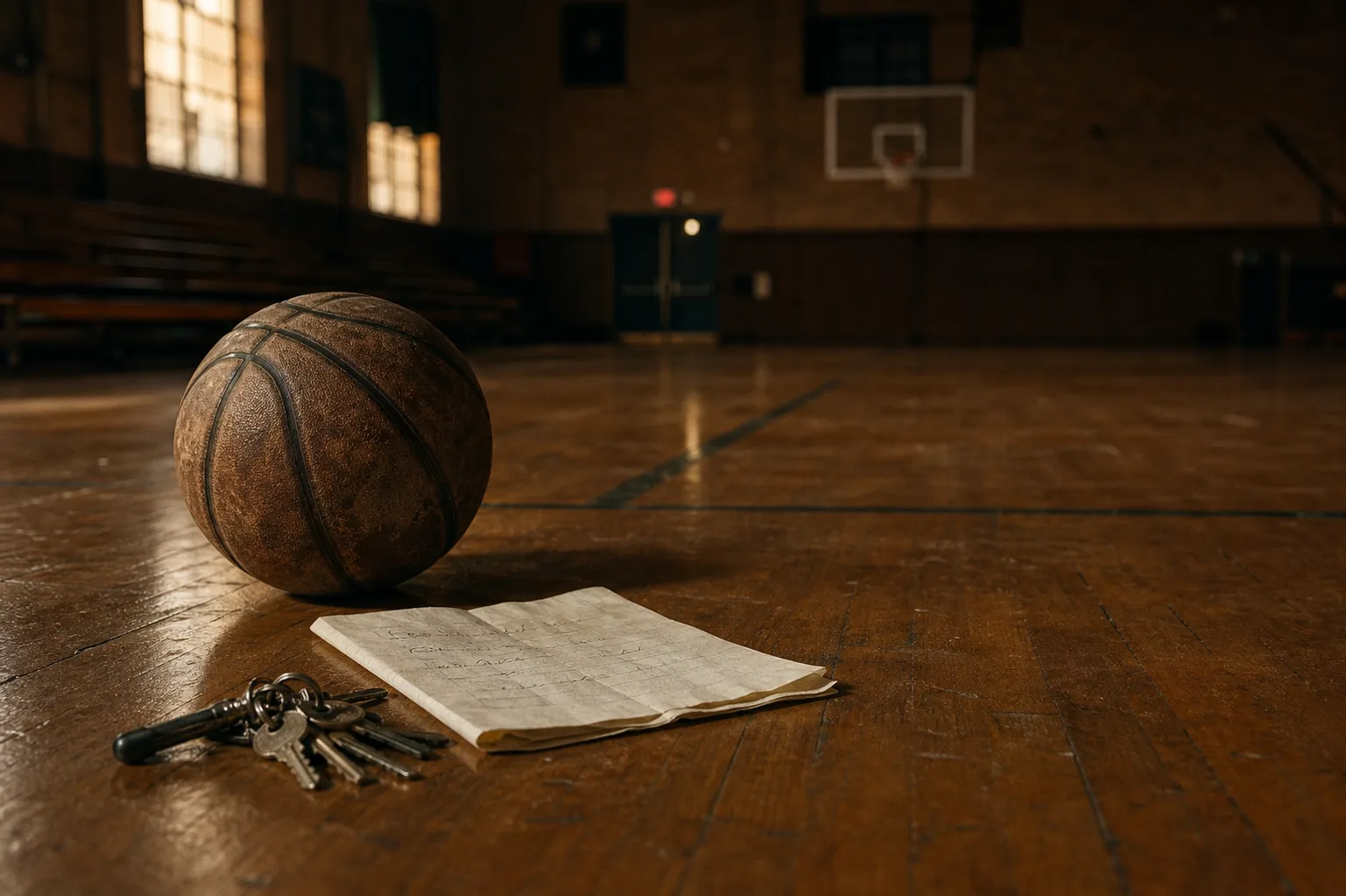
A handwritten notice near the gate lists the next municipal meeting about resurfacing. The court’s community is not only sentimental; it is organized. People who share games also share photographs of cracks, budget dates and the patience required to ask again.
At sunset the brick wall holds the final warmth. The game ends because the ball becomes difficult to see, not because anyone has won enough. People leave in different directions, carrying the loose promise that tomorrow the teams will be made again.