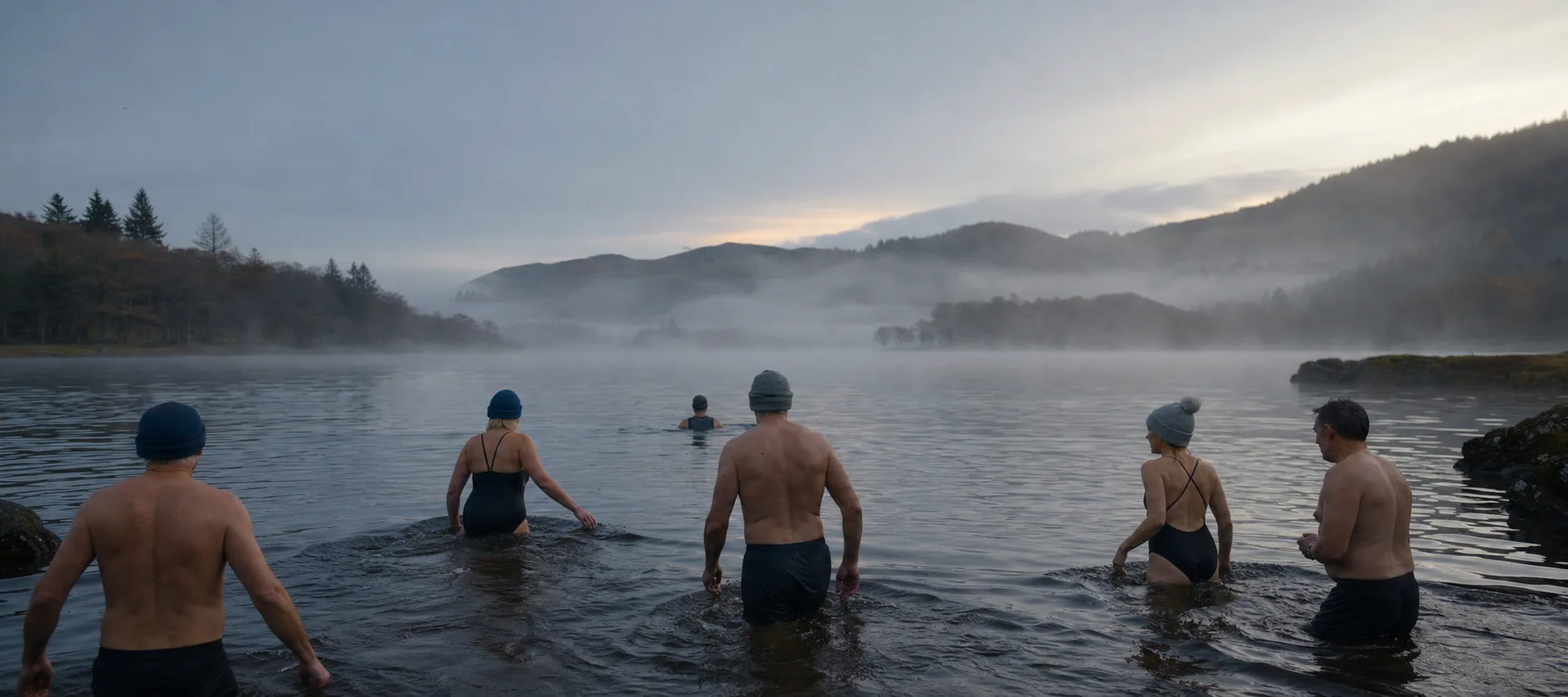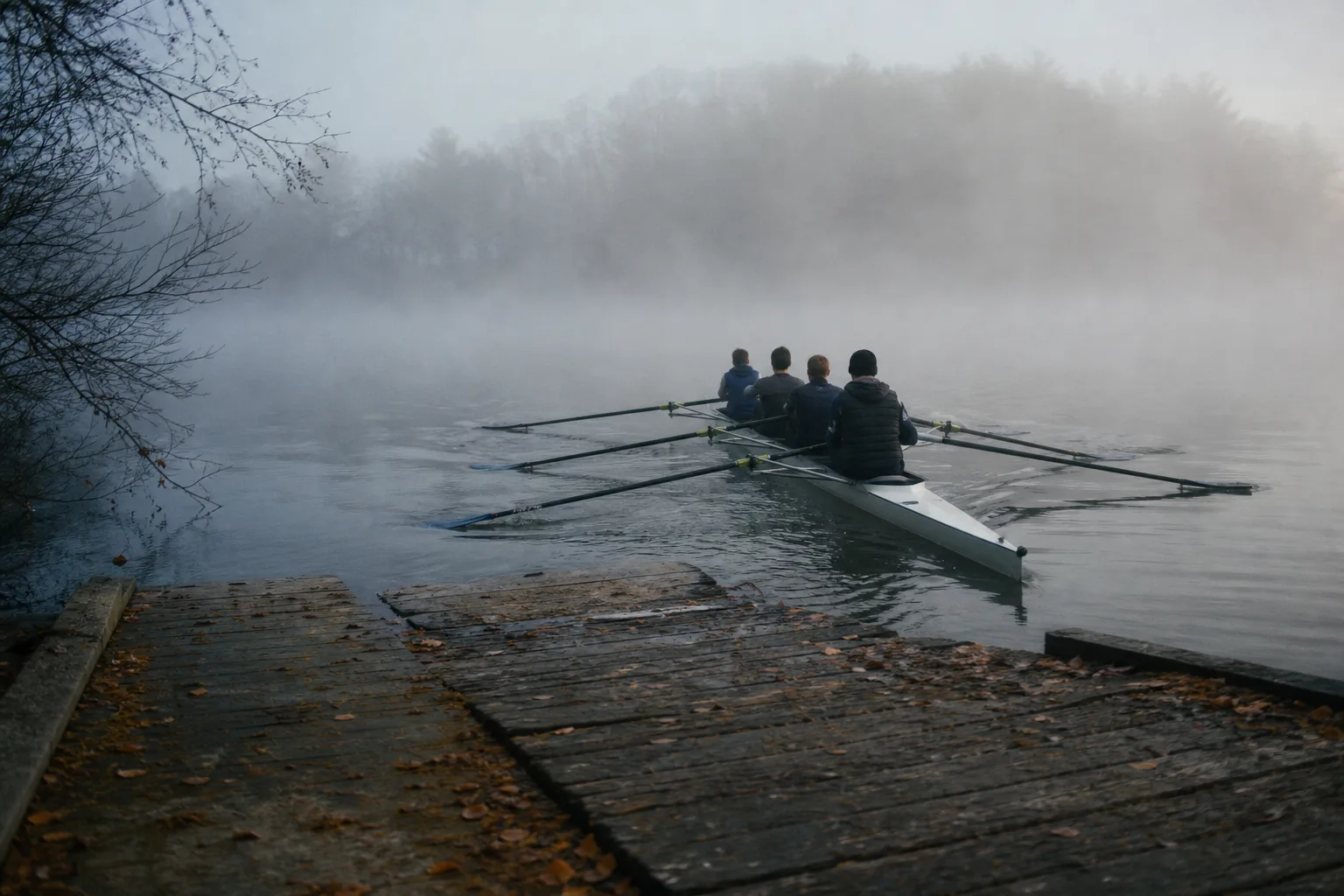
Before anyone enters, the lake is mostly heard. Water moves against stone with a small repetitive pull. A zipper travels up the back of a wetsuit. Someone puts a metal cup on the ground and the sound carries farther than expected. The group is visible in fragments, each person standing inside the beam of a headlamp while the rest of the shore remains dark.
Nora Vale arrives last and apologizes although nobody has started. She carries the kettle and a bag of dry gloves. The others have learned not to tease her about the amount of equipment. The gloves have rescued too many mornings. Practical care, repeated often enough, becomes part of a group’s character.
What the shore holds
The conversation moves without conclusion. A broken boiler. A child who has begun waking at four. Whether the moon is still visible behind the cloud. These are not distractions from the swim. They are the way each person becomes present enough to enter. Nobody arrives as an athlete only.
The quiet is not silence. It is room for small things to be heard.
At the waterline, voices shorten. Cold makes direct language useful. Ready. With you. Turning. Fine. A hand touches a shoulder and lifts away. Then the first strokes begin, louder than they look from a distance: breath, splash, breath, the brief smooth interval when an arm travels forward through air.
The kettle begins before the swimmers return. It clicks and trembles on a camping stove while the shore waits. When the first person stands, water leaving their clothes makes the same small sound it made against the stones. The morning has changed, but its materials are unchanged.
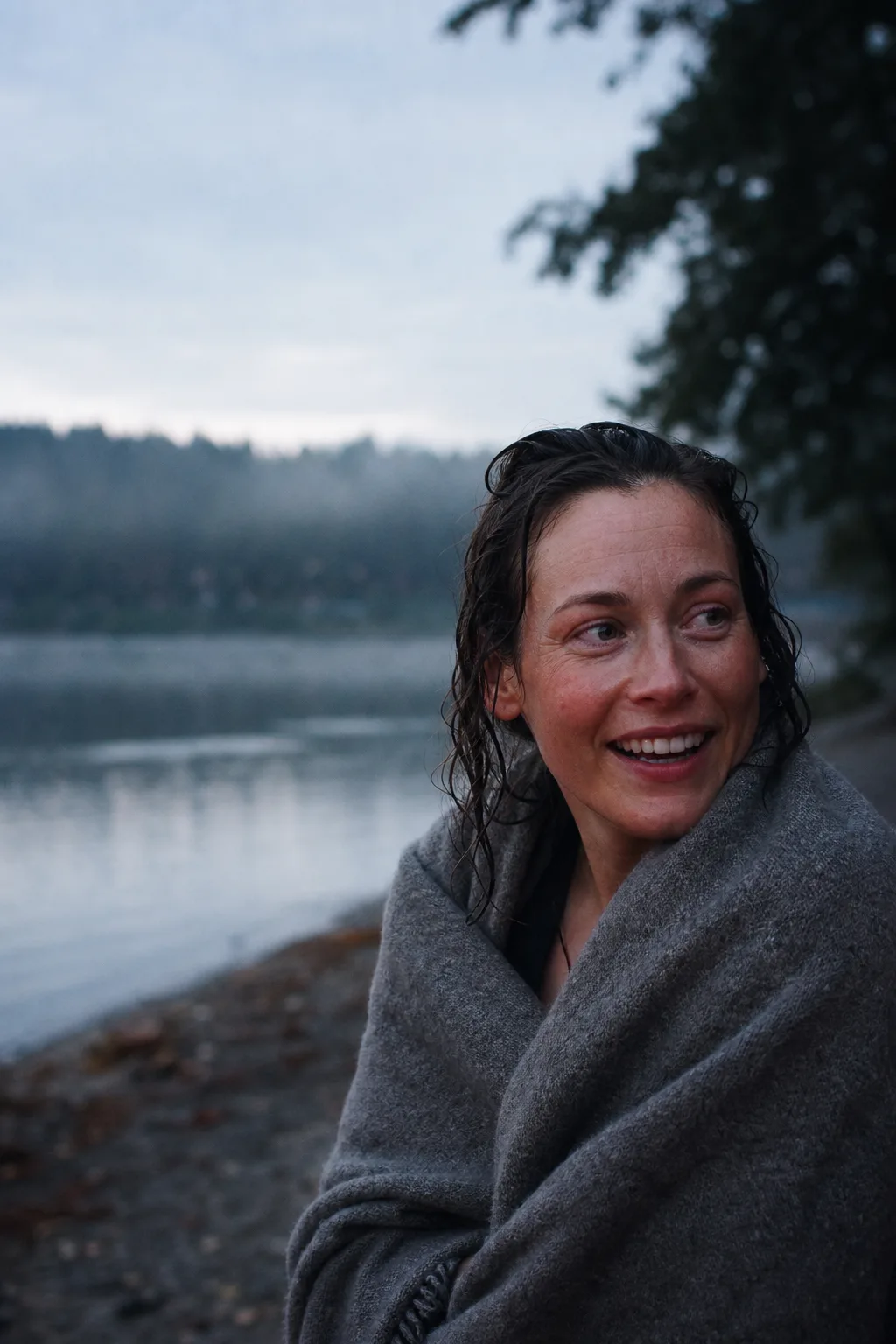
After the swim, speech returns in layers. First come useful words—towel, glove, cup—then complete sentences. Someone remembers the broken boiler. Someone else finishes the story about the waking child. The cold has not purified the morning or solved what people carried into it. It has briefly made cooperation simple enough to hear.
There are other sounds the group hopes never to hear: a repeated whistle from the water, a voice that does not answer, wind strengthening through the reeds. They review signals at the start of each season. Familiarity with one another is helpful, but it does not replace a plan that can be followed when attention narrows.
Vale says the most reassuring sound is a name spoken clearly. Not encouragement, not a joke—just confirmation that one person can locate another. On darker mornings the swimmers repeat names more often, building a small map from voices until the shore returns.
By the time car doors close, the lake is audible without them. Reed, stone and water continue the recording no device has made. The group leaves behind no soundtrack, only the practiced expectation that next Thursday someone will call each name again.
There is no playable recording attached to this field note. The scene is described rather than simulated. What matters is not the fidelity of an audio file but the attention required to notice that a group can be held together by sounds almost too ordinary to name.