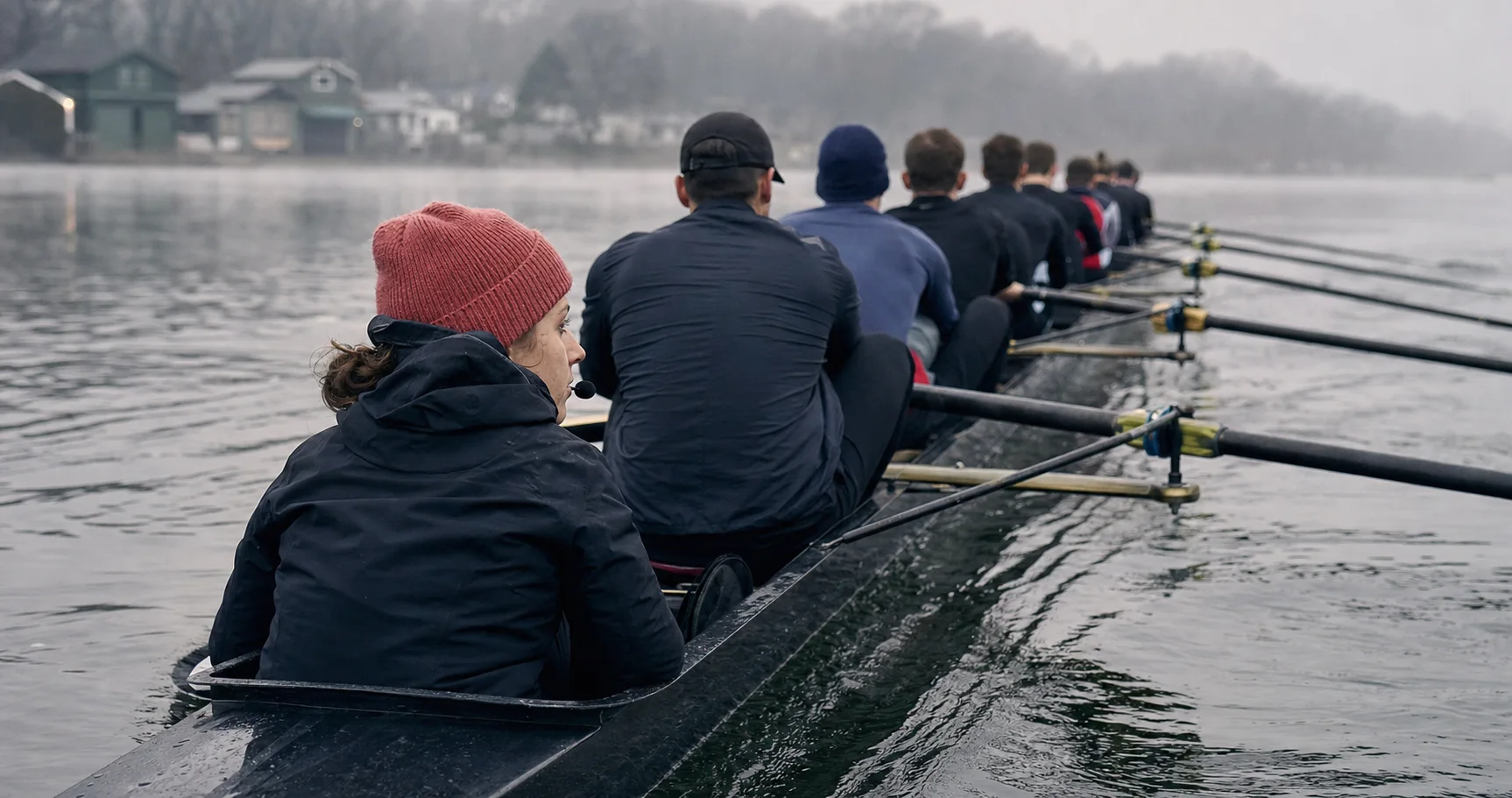
The far bank has disappeared. Four rowers carry the shell to the landing anyway, moving slowly enough that every instruction can be heard once. Fog has reduced the river to a narrow corridor of timber, grey water and the dark line of trees immediately upstream.
They do not launch because conditions are irrelevant. They launch because the club has a conservative plan for this particular morning: stay close to shore, keep the outing short, post a watcher at the bend and turn if sound becomes difficult to place. Uncertainty changes the work before anyone touches an oar.
Visibility changes the plan. It does not remove the morning.
A larger kind of listening
On clear days the rowers orient by bridges and buildings. In fog, distance becomes acoustic. A dog barks from a garden that cannot be seen. Another shell announces itself through the repeated click of seats. The crew pauses, blades resting flat on the surface, until the sound passes downstream.
The outing is slower, but attention expands to fill it: blade, water, breath, the voice behind you. Each person must place an oar in relation to movements they cannot fully inspect. Coordination becomes less visual and more generous. A mistake is named early and without blame because correction belongs to everyone.
Near the bend, a low motor becomes audible. The crew stops and moves closer to shore while the watcher signals from land. Nothing appears for almost a minute. Waiting feels longer when the source of a sound is hidden, but nobody fills the interval with speculation. The plan already contains the decision.
A small workboat passes at low speed, its operator raising one hand. The crew waits for the wake to soften against the bank. Only then do blades square again. The interruption costs several minutes and becomes part of the outing without requiring blame.
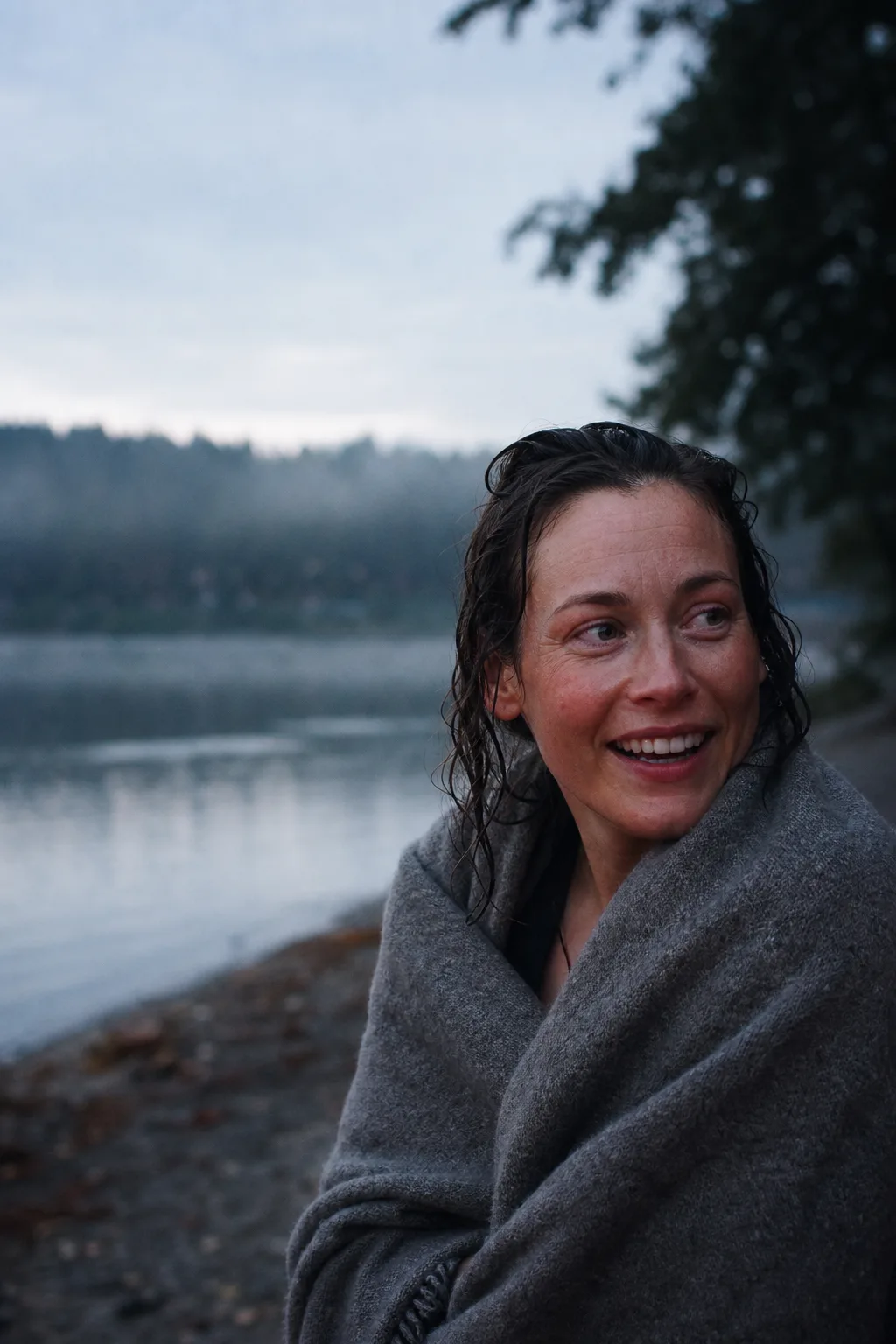
Back at the landing, Shaw records the visibility and route in the club log. The note is plain enough to help another crew decide differently tomorrow. Experience becomes useful when it can travel beyond the people who happened to be in the boat.
The crew carries the shell inside and leaves it on trestles to dry. Fog remains over the water, no longer an obstacle because the outing is complete. Shortening the route has not made the morning smaller. It has made attention the result worth bringing home.
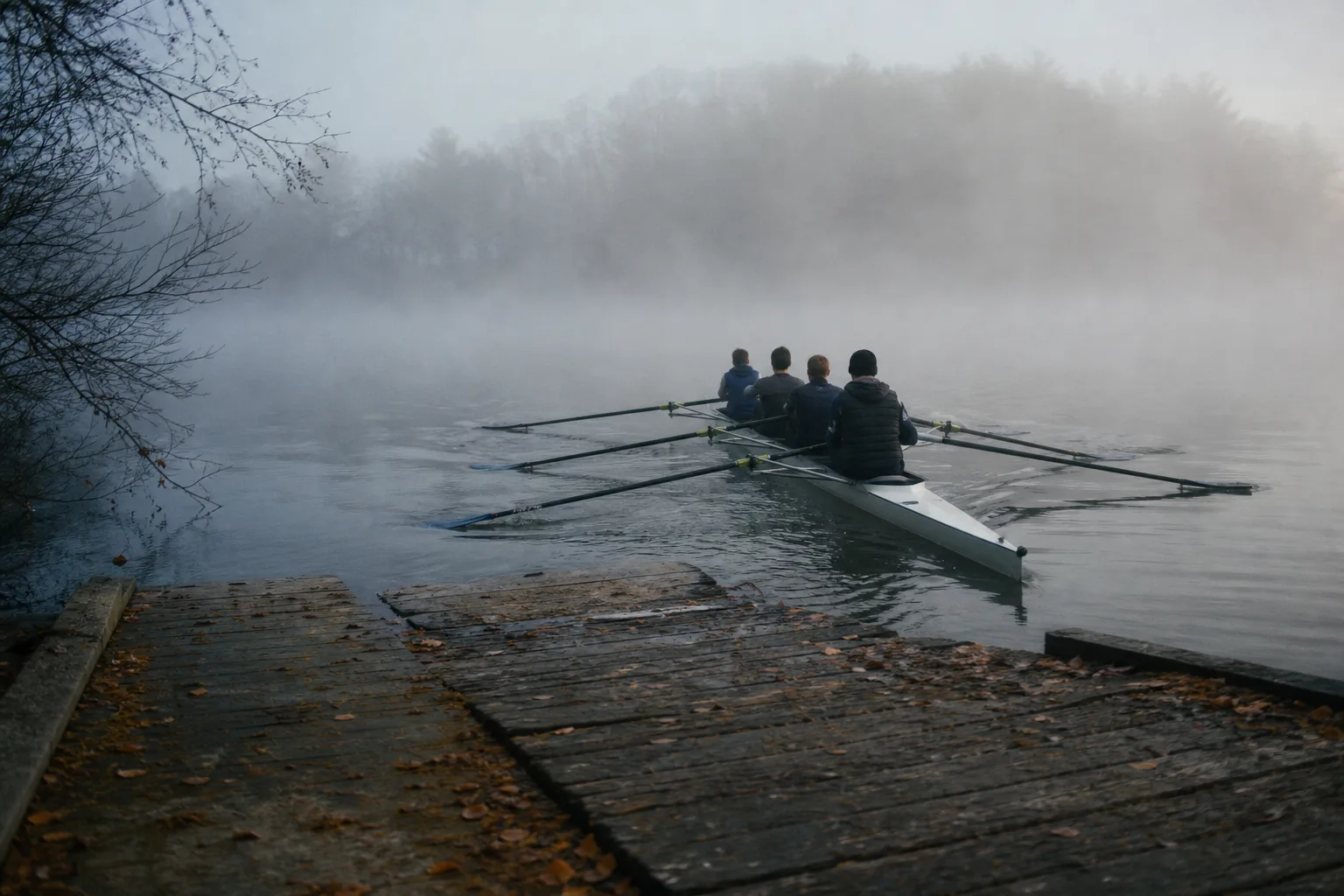
They turn well before the usual marker. Nobody argues for the full route. The shortened session has its own completeness. By the landing, hands are cold and the opposite bank is beginning to appear.
When the shell returns, it arrives first as sound. The watcher hears the coxswain’s voice, then the run of the hull, and finally sees four blades emerge in sequence. On shore the crew lifts together. The fog has not taught them a lesson. It has simply required the habits they hoped they already possessed.