The first person enters without announcing it. The others follow, one breath and one careful step at a time. From shore their movement looks coordinated, but up close it is made of separate negotiations: a tightened jaw, a hand lifted away from the water, a joke delivered too quickly.
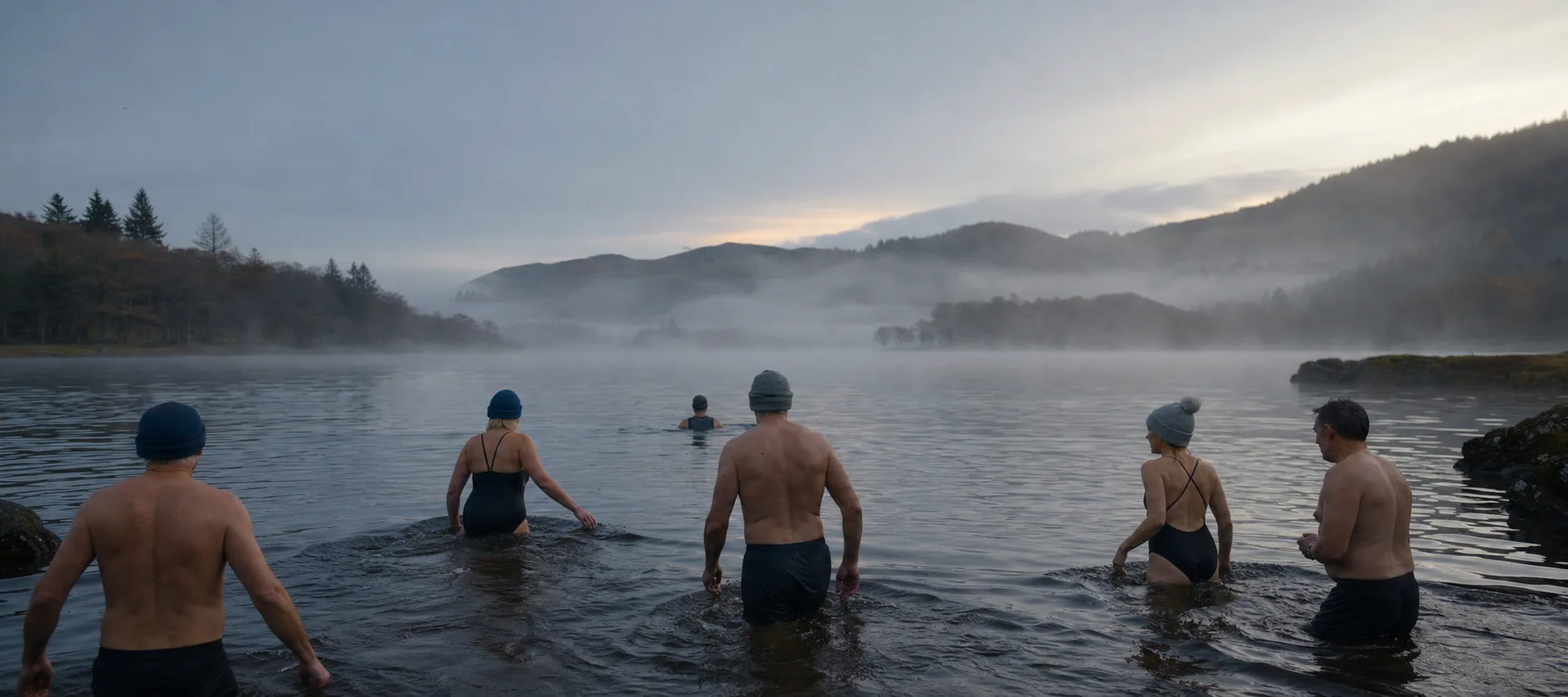
Nobody calls it bravery. They talk about the weather, who remembered the coffee and whether the wind will pick up before work. The language stays ordinary because the practice depends on being repeatable. Heroism would be too exhausting to schedule every Thursday.
The honest part is the first minute. After that, you remember you are not alone.
They swim parallel to shore, close enough to recognize a raised hand. The route changes with conditions. Some mornings the group reaches the marker near the reeds; on others, entering and leaving safely is the complete event. Nobody owes the lake a distance.
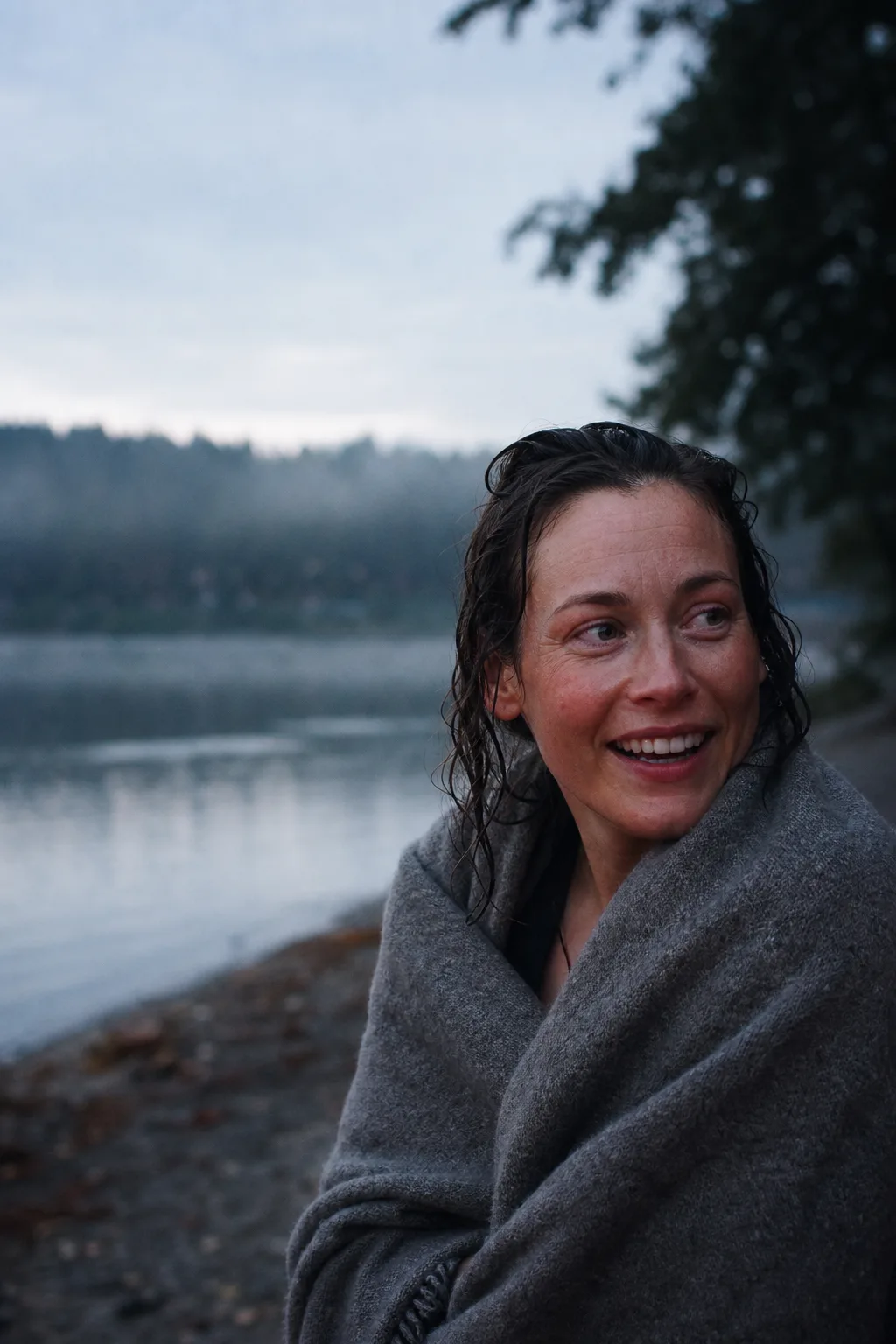
On land, towels and blankets turn five swimmers back into five people with separate days. One teaches mathematics. One repairs elevators. One is caring for a parent who no longer remembers the lake. For ten minutes they stand around a small stove, holding warm cups through gloves.
They keep a written check-in and check-out list in the lid of the equipment box. The page is damp at the corners and entirely practical. Togetherness does not make conditions safe by feeling alone. Their friendship is expressed partly through limits: nobody swims unaccounted for, and nobody is teased for choosing the shore.
By six fifteen they are dressed again. The lake closes behind them without evidence. Their cars leave the gravel one by one, and the town begins its ordinary noise.