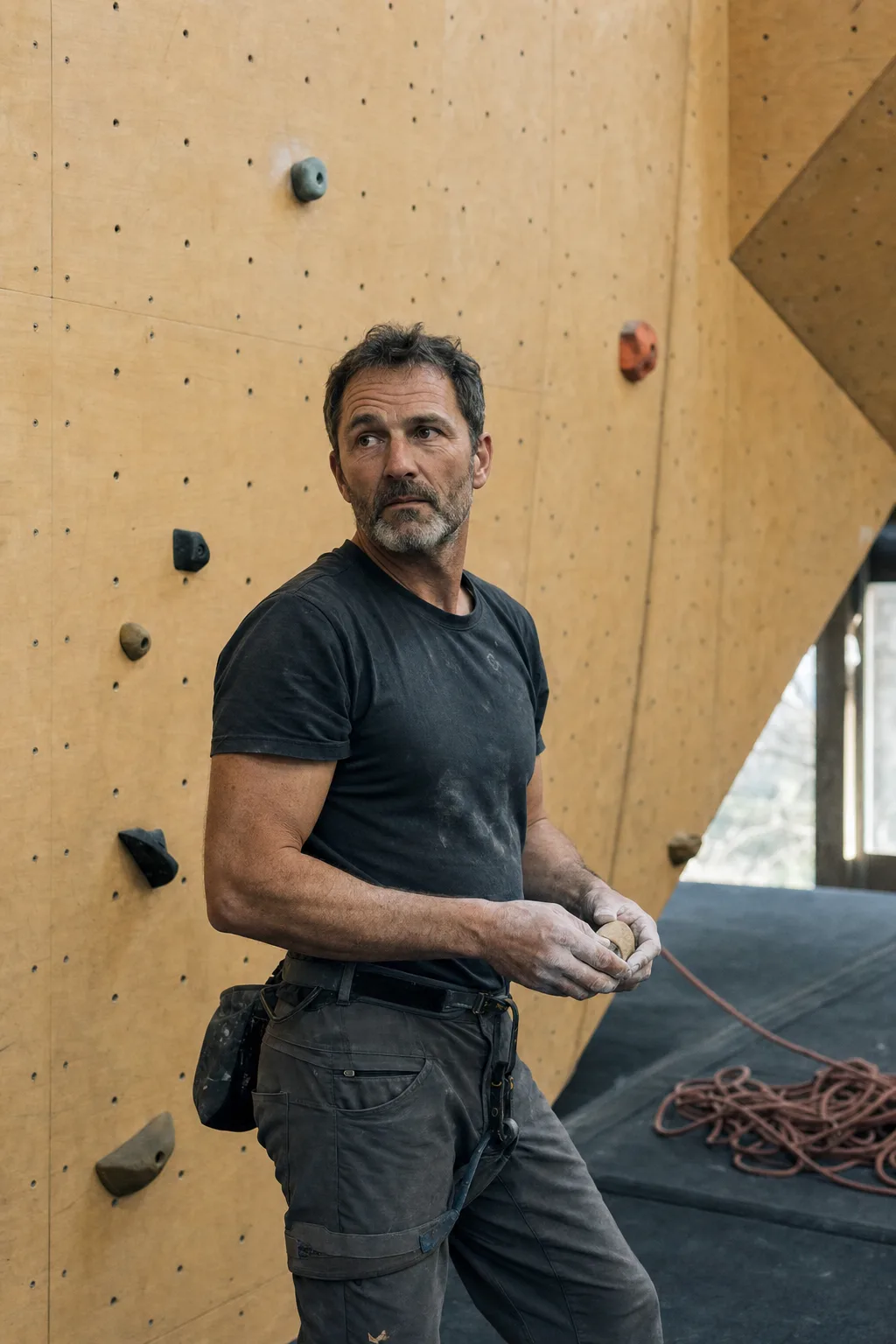
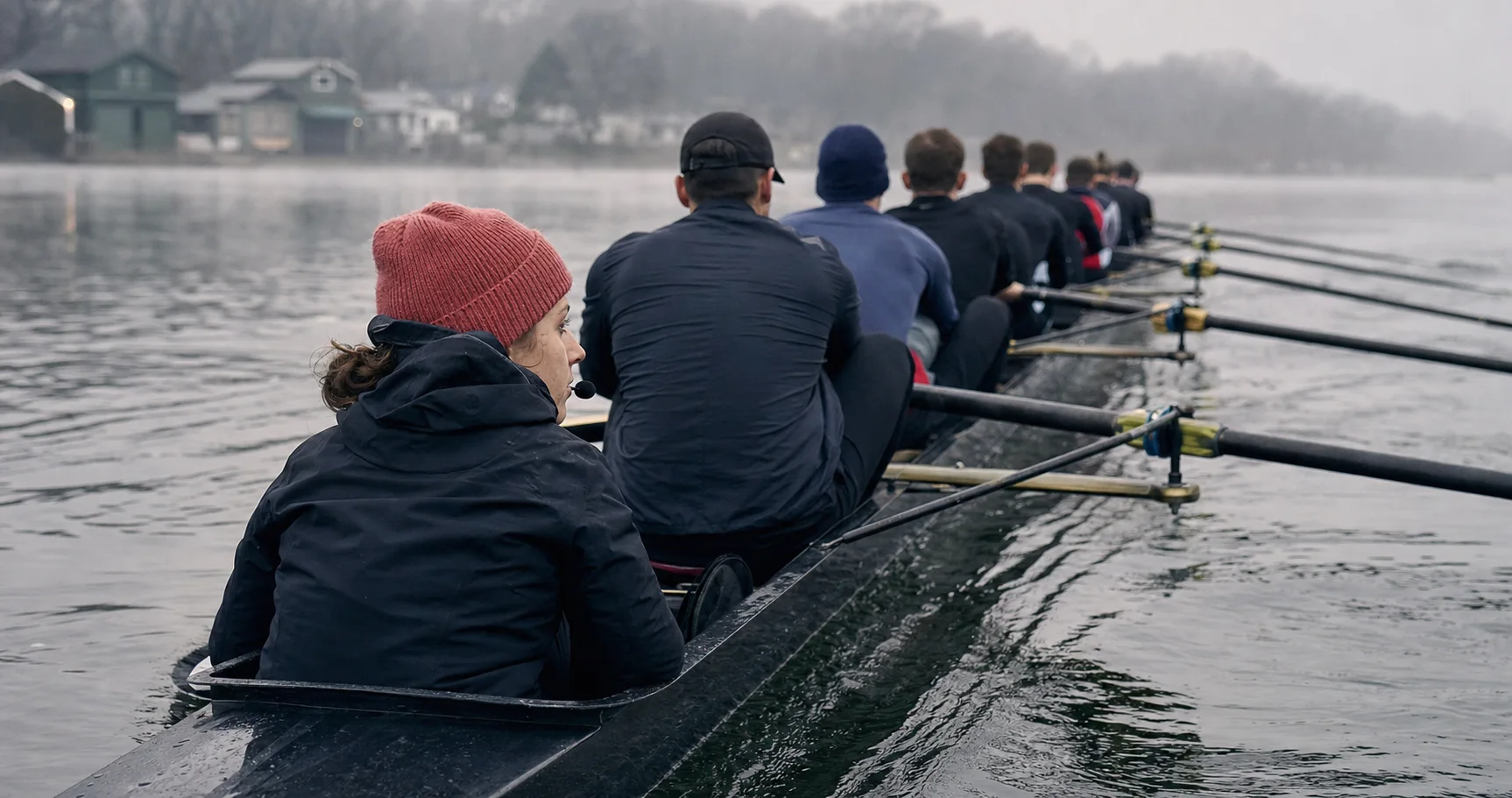
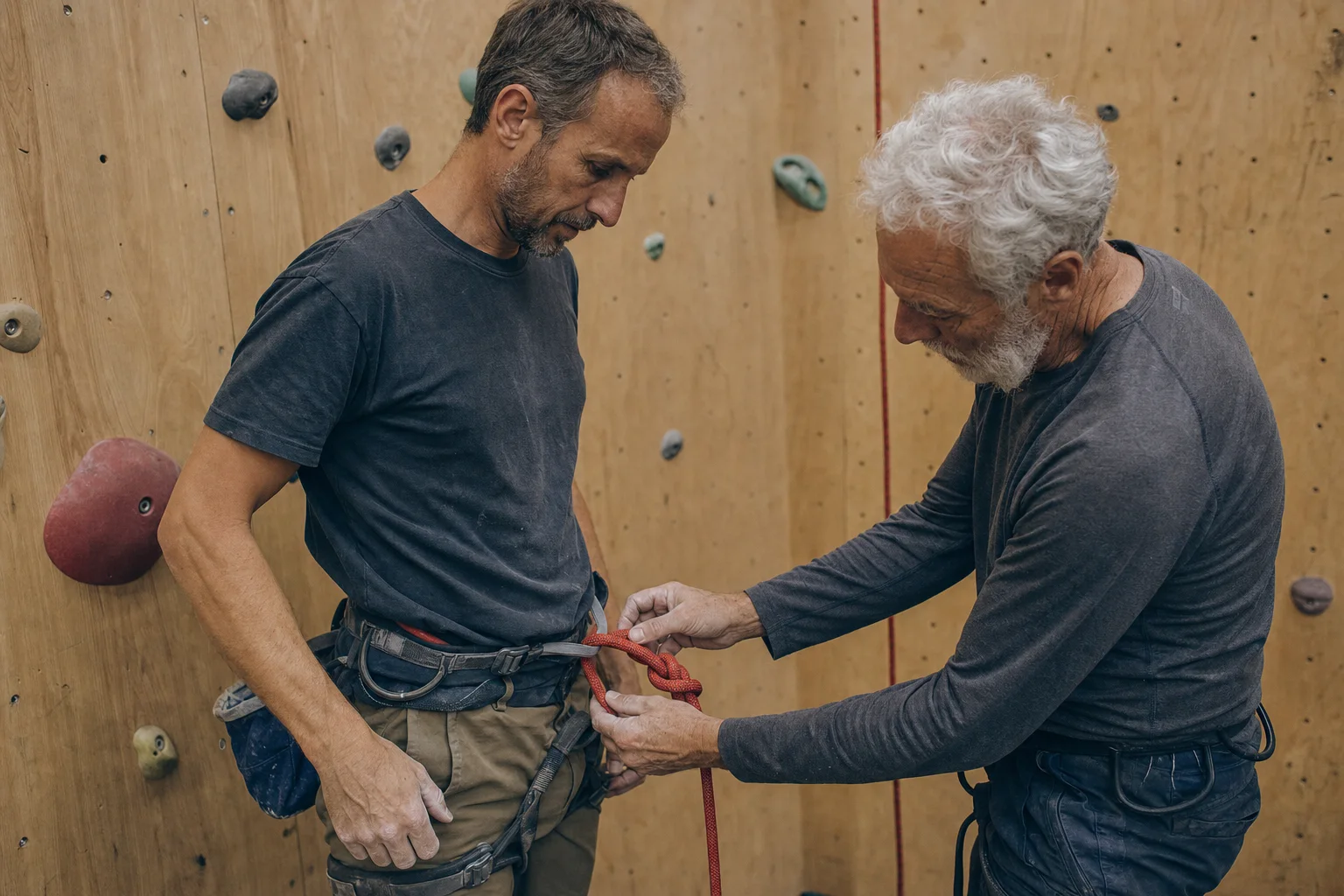
The climber is ready before the belayer. One shoe rests against the wall, body already angled toward the first hold. Still, nobody leaves the ground. Daniel turns back. Priya checks the knot, then the buckle, then the device. Daniel repeats the sequence from his side. Their hands move through a routine designed to remain unremarkable.
Climbing photographs favor height. The visible drama happens above: exposure, effort, a hand reaching into space. Belaying is composed mostly of attention below the frame. A person feeds rope, takes it in and notices changes in pace. They make possible a kind of risk without becoming its audience.
Trust is not saying “I have you” once. It is behaving like you mean it for the entire climb.
Ordinary on purpose
Daniel and Priya have climbed together for nine years. Familiarity could make the check feel unnecessary. They treat familiarity as the reason to preserve it. Routine protects them from the confidence of having done something many times.
Their partnership includes disagreement. Daniel likes to work through uncertainty on the wall; Priya prefers a clear plan before leaving the ground. Neither preference becomes the rule for both. Before each climb they establish what words mean today: whether “take” is immediate, whether silence means concentration and when a suggestion is welcome.
Halfway up, Daniel stops speaking. Priya does not fill the silence. She watches the rope, his hips and the small adjustments in his feet. When he asks for tension, it arrives without commentary. When he decides to come down, no case is made for one more attempt.
The restraint is part of care. Encouragement can become pressure when it refuses a person’s own reading of risk. Priya’s job is not to extract the highest point from Daniel. It is to support the decisions of the climber who is actually on the wall, including the decision to return to the floor.
When a newer climber asks them for advice, they begin with the check rather than the climb. Spectacular movement can wait. The culture they want to pass on starts with a slower competence: asking, confirming and treating a partner’s attention as something that must be renewed rather than assumed.
Trust grows partly through these repetitions and partly through repair. They have missed cues, spoken sharply and misunderstood risk. Afterward they name what happened while the details are still available. A reliable partnership is not one without error. It is one in which error can become information without becoming humiliation.
The next climb is easier, chosen not as retreat but as a place to restore rhythm. Daniel moves without hesitation. Priya says little. At the top he looks down, confirms before lowering and is returned steadily to the same floor where the promise began.
Back on the floor, they exchange the equipment. The promise changes direction. Knot, buckle, device, carabiner, then eyes up. The wall has not changed. The person responsible for watching has.