Tired is an imprecise word for a precise experience. It can mean depleted, bored, overwhelmed, underfed, peacefully used or simply ready to stop. On a bicycle, those meanings arrive through similar signals: a shortened breath, a heavy leg, attention narrowing toward the few meters of road immediately ahead.
The Northside cycling club used to answer every version with the same encouragement. Stay on the wheel. One more hill. You are stronger than you think. The phrases were generous and sometimes useful. They also made it difficult to say when persistence was no longer the most intelligent response.
Information, not instruction
The sensation of effort is information. It is not, by itself, an instruction to continue or a command to quit. Useful practice begins by learning the difference. That learning cannot be outsourced completely to a device or a coach because sensation is part of the evidence. Nor can sensation stand alone. Context gives it meaning.
Fatigue becomes useful when attention is allowed to interrupt ambition.
The club changed its rides in small ways. The regroup point became an actual stop rather than a place where slower riders arrived just as everyone else left. Route leaders began naming the next shortcut without attaching shame to it. Riders were asked how the effort had changed, not whether they were tough enough to tolerate it.
This vocabulary did not remove discomfort. Long climbs remained long. New riders still discovered that effort can feel alarming before it becomes familiar. The difference was that difficulty could be described with greater resolution. A person could be tired and steady, tired and unfocused, tired and in pain, or tired and content. Each description suggested a different decision.
Devices remained part of the conversation. Heart rate, power and route data could provide context, especially when feeling and output diverged. But numbers were treated as one witness rather than the judge. A reading might prompt a question; it could not answer what sleep, work, fear or weather had contributed without the rider.
The social shape of effort
Fatigue is never entirely private in a group. One rider’s ambition can become another rider’s obligation. A strong person who accelerates smoothly may not realize the series of small decisions happening behind them: skip the drink, ignore the knee, cross the junction late, avoid being the reason everyone waits.
Northside now assigns a final rider whose job is not rescue but companionship. The position rotates. Experienced cyclists learn what the ride feels like from the back, where route information arrives last and every gap looks larger. The group has become slower on paper and more reliable in practice.
Reliability has changed who returns. Riders who once appeared twice and disappeared now become regulars. The club had assumed those departures reflected a lack of interest or fitness. Listening revealed a simpler problem: the group’s stated welcome ended whenever the road tilted upward. No amount of friendly language could compensate for repeatedly being left alone.
Sometimes the constructive answer is another repetition. Sometimes it is food, sleep or an honest conversation about why the work has become impossible to carry. The aim is not to make fatigue safe or simple. It is to become more articulate in its presence.
Articulation takes practice because sport rewards compressed answers. Fine. Good. Keep going. Those words protect momentum, and sometimes momentum is exactly what a person needs. The club is learning to create moments where a longer answer does not threaten belonging. A rider can name uncertainty and remain part of the ride.
The change is cultural rather than clinical. Club leaders are not diagnosing fatigue, and the group does not replace individualized medical care. Its contribution is narrower: creating conditions in which a person can notice change early, describe it without embarrassment and seek appropriate help before silence becomes the price of membership.
That is a modest change, but modest changes are often the ones a community can sustain.
Enough for tomorrow
At the café, one rider describes the final hill as satisfying and another calls it unnecessary. Both assessments can be true. A group becomes more intelligent when difference does not have to be settled into a single moral. Effort can be meaningful without being prescribed to everyone present.
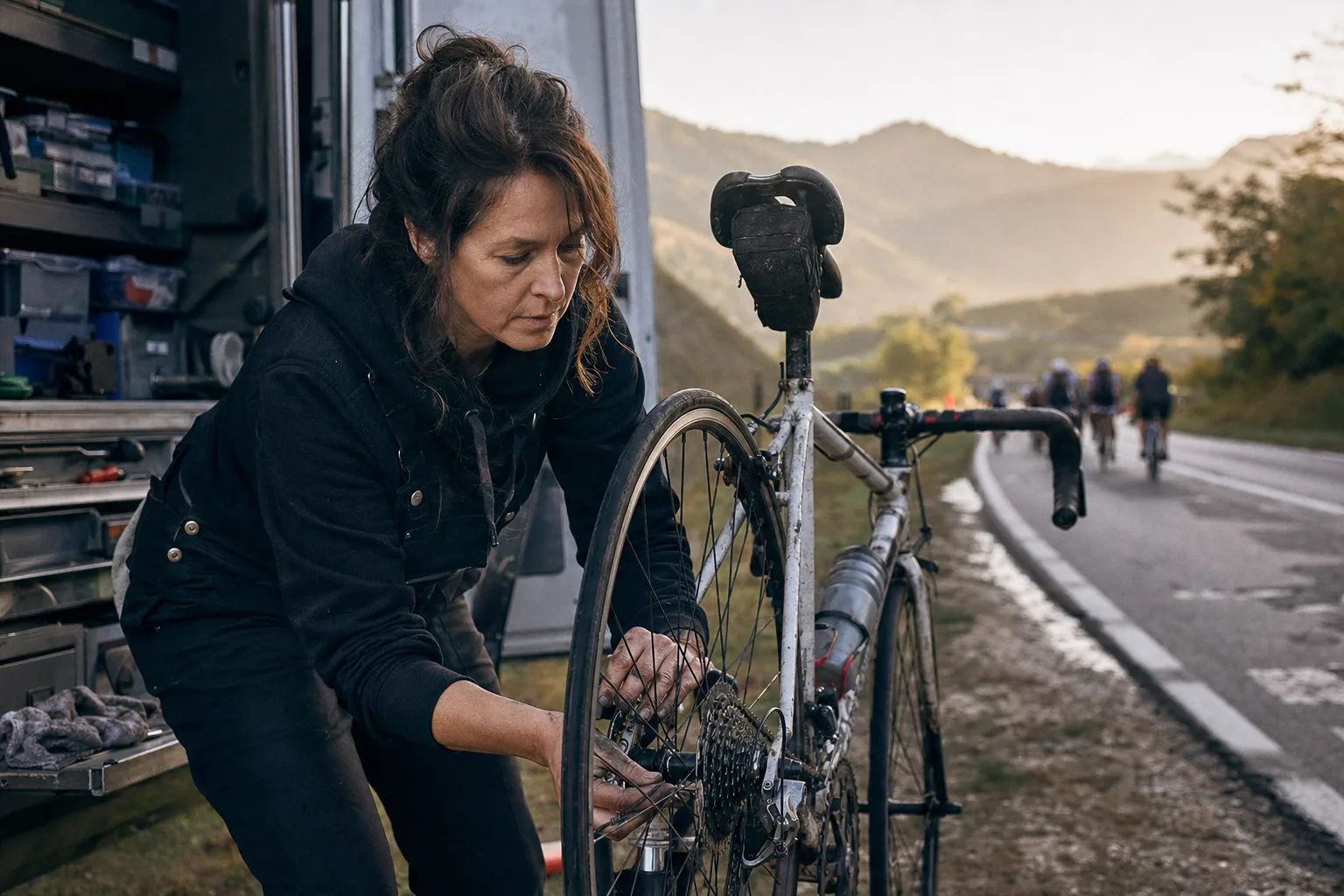
The bicycles outside are marked by the same road: dust on the down tubes, empty bottles, chains needing attention. The bodies beside them are not equally used. Northside’s emerging practice is to let those differences remain visible, then plan a next ride spacious enough for people to return.
This is not a final philosophy of fatigue. It is a working language, revised whenever someone’s experience exceeds it. The club’s most useful change may be its willingness to leave the definition open. Tired can remain imprecise while people become more precise about what they need next.
At the end of Sunday’s ride, people lean bicycles against the café wall and compare the day. Nobody agrees on how hard it was. Agreement is no longer required. A useful kind of tired is not a universal category. It is the feeling that effort has taken something and left enough attention to understand the exchange.